Makian

Key takeaways
- Set the budget at the campaign level, not on each ad set. That way the algorithm spends where results are best instead of propping up ad sets that don't work.
- Three separate campaigns by audience temperature: cold, retargeting and retention. Mixing them cannibalizes your audiences and muddies your data.
- One variable per ad set. If you change the audience and the creative at the same time, the result can't tell you which one worked.
- 3 to 5 creatives per ad set, rotated regularly to fight ad fatigue.
- Structure is useless without clean data: the pixel, Conversions API and verified events come first.
Structure is the foundation of scalable Meta Ads
Most brands treat Meta Ads as a loose experiment. The ones that perform treat it as a system. The difference is structure: a clear hierarchy that separates testing from scaling, isolates variables and gives the algorithm the right signals to optimize well.
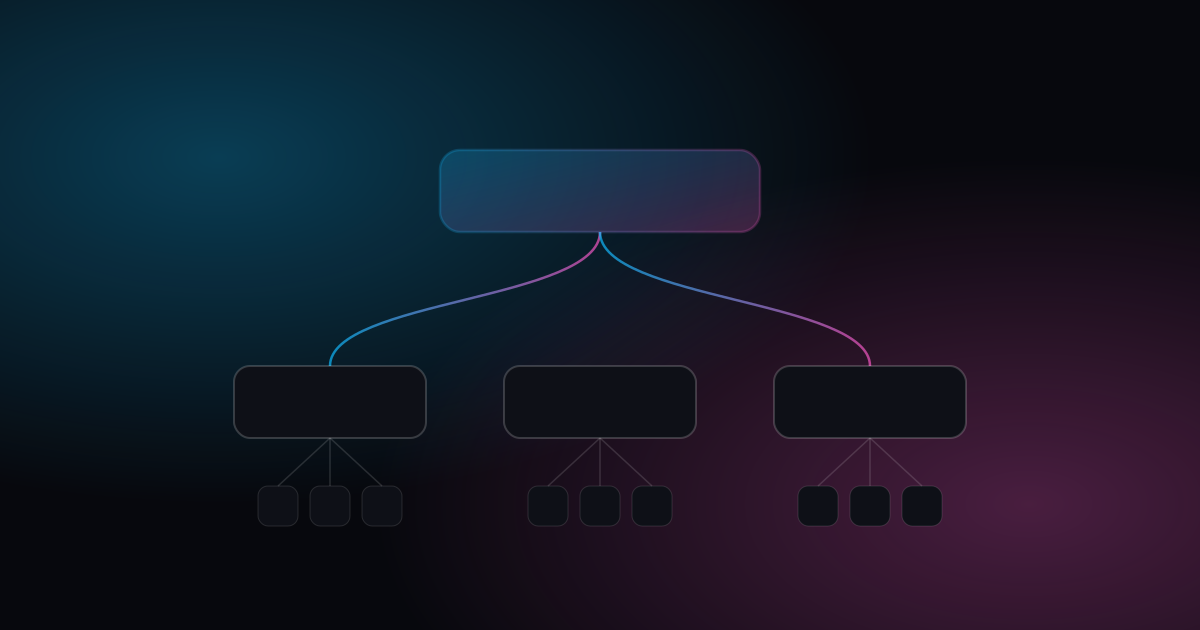
The three-campaign structure
Instead of cramming everything into a single campaign, I split by funnel stage:
- Campaign 1, prospecting: broad or Advantage+ audiences, optimizing for purchases or leads.
- Campaign 2, retargeting: site visitors, video viewers and people who engaged with your content.
- Campaign 3, retention: existing customers. Cross-sells, upsells or loyalty offers.
Ad sets: avoiding cannibalization
- Consolidate: a few broad ad sets outperform many fragmented ones
- Use campaign-level budget so Meta can distribute spend efficiently
- Keep interests from overlapping between ad sets
- Test one variable per ad set: audience, placement or creative
Creative rotation and managing fatigue
- Launch at least 3 to 5 creatives per ad set
- Check hook rate and hold rate every week, not just CPA
- Pause anything that drops below your CTR threshold
- Bring in new creative before fatigue sets in, not after
Tracking: clean data is everything
The minimum viable setup:
- A Meta pixel that's properly configured and verified in Events Manager
- A server-side Conversions API implementation to recover the signal lost on iOS
- Every key event mapped: purchase, lead, add to cart and initiate checkout
- UTM parameters on every ad for cross-platform attribution
Tracking is the first thing I audit, before touching the campaign structure. Bad data is worse than no data.
Campaign budget or ad set budget: when to use each
This is the decision that sparks the most debate, and the answer isn't dogmatic: it depends on what you're trying to achieve.
Campaign-level budget —what used to be called CBO— is the default once you know what works and want to scale. Meta shifts money toward wherever it finds results, and it does that better and faster than you can by watching the dashboard. It's the setup for the scaling phase.
Ad set budget makes sense when you're testing and need to guarantee that each variation gets enough money to send a signal. If you let the campaign distribute spend during a test, it will pour the budget into whichever ad set starts strongest in the first few hours, and you'll never know whether the other one would have won with more time.
The rule I use: test with ad set budgets, scale with campaign budgets. Switching between them partially resets the learning phase, so it's not something to do every week.
How many ad sets, and with how much budget
The most common mistake in small accounts is building a big account structure. Eight ad sets on the budget of two means none of them gathers enough data, and they all stay stuck in the learning phase forever.
The healthy way to think about it is the other way around: don't start with how many ad sets you want; start with how many conversions each one needs for the data to mean something. If your cost per result is $20 and you want around 30 conversions a week per ad set to make decisions with some confidence, each ad set needs about $600 a week. With that number on the table, the number of ad sets your budget can support works itself out — and it's almost always fewer than you had.
I'd rather have three well-fed ad sets than eight starving ones. Every time.
How the structure changes with account size
- Small account: a single conversion campaign, two ad sets (broad cold and retargeting), 3 to 5 creatives in each. Nothing more. Simplicity here isn't laziness: it's what lets the algorithm learn.
- Mid-size account: the three campaigns by temperature —cold, retargeting and retention— with campaign-level budget on cold, which is where the volume is.
- Large account: add a separate campaign just for testing, with a small, fixed budget that works like a farm team. Whatever wins there moves up to the scaling campaign. That way you never put your main budget at risk testing new ideas.
Structural mistakes I see every week
- Duplicating the winning ad set. It looks like you're multiplying results; in reality you're making your own ad sets compete in the same auction and driving up your own costs.
- Retargeting windows that are too long. Chasing someone for 180 days after a single visit means spending on people who've already forgotten you. Start short and widen it if the volume isn't there.
- Bad exclusions. If your cold ad set doesn't exclude recent buyers, you're paying to sell again to someone who bought from you yesterday.
- Touching the account every day. Every significant edit resets the learning phase. If you change something daily, your account lives in permanent learning and never gets the chance to perform.
How often to touch the structure
Structure is the skeleton: review it quarterly, not weekly. What does rotate often is the creative, because that's where real fatigue lives. If you feel the urge to restructure every month, what's probably broken isn't the structure but the tracking: when you don't trust the numbers, the natural reaction is to move things around so you feel like you're doing something.
Frequently asked questions
How many campaigns do I need if I'm just starting out?
One. A single conversion campaign with two ad sets and enough creative. Add complexity when the volume justifies it, not before. Most of the small accounts I audit have the opposite problem: too much structure for the budget they're working with.
Is it a bad idea to duplicate an ad set that's working well?
Yes, generally it is. When you duplicate it, both ad sets compete in the same auction for the same people, and you end up bidding against yourself at a higher price. If you want more volume from the winning ad set, raise its budget gradually —20 or 30% every two or three days— instead of cloning it.
How often should I change my creatives?
There's no fixed number: there's a signal. When frequency goes up and CTR goes down at the same time, fatigue has arrived. In high-budget accounts that can happen within a week; in small accounts it can take a month. What matters is having new assets ready before the signal shows up, not after.
This is the same structure I use to build my clients' accounts: tracking first, then the campaign hierarchy. If you haven't picked a channel yet, start with whether Meta Ads or Google Ads is right for you; and if you sell products, read how to build a TikTok Shop funnel. Get the free audit and I'll tell you in writing how yours is set up.